A kitchen is one of the most demanding spaces in any home. The materials you choose for benchtops, cabinetry, and surfaces determine how your kitchen performs and looks for years, not just at installation. At Prominent Kitchens & Joinery, material selection is one of the most important conversations we have with every Sydney client.
Key Takeaways
- Engineered stone is now banned: Australia prohibited the manufacture, supply and installation of engineered stone benchtops from 1 July 2024. Alternatives include porcelain, sintered stone, and natural stone.
- Porcelain and sintered stone lead the market: Heat resistant, scratch resistant, and low maintenance, these materials are the dominant post-ban choice for Sydney kitchens.
- Cabinetry material determines long-term durability: HMR melamine, two-pack polyurethane, and solid timber veneer each suit different budgets and performance requirements.
- Sydney’s climate influences material choice: Humidity, temperature variation, and proximity to the coast all affect how materials perform over time.
Why Material Choice Matters More Than People Expect
A beautifully designed kitchen can look dated within a few years if the materials were not chosen with longevity in mind. Surface finishes that chip, benchtops that stain, and cabinet doors that warp are the most common sources of renovation regret we hear from Sydney homeowners. The good news is that with the right material selection upfront, these outcomes are almost entirely preventable.
The landscape for kitchen materials in Australia has also shifted significantly since 1 July 2024, when a national ban on engineered stone benchtops came into effect. As confirmed by SafeWork NSW on the engineered stone prohibition commencing 1 July 2024, the manufacture, supply, processing and installation of engineered stone benchtops, panels and slabs is now prohibited across all Australian states and territories. This was based on Safe Work Australia’s recommendation in response to rising rates of silicosis among engineered stone workers. Sydney homeowners now have a clear and excellent range of compliant alternatives that in many cases outperform engineered stone.
Benchtop Materials: What Works Best in 2026
1. Porcelain and Sintered Stone
Porcelain and sintered stone surfaces have become the dominant benchtop material in Sydney kitchens since the engineered stone ban. They are kiln-fired ceramic products that are not subject to the prohibition, and their performance credentials are outstanding.
Key advantages:
- Exceptional heat resistance. Pots and pans placed directly on the surface will not cause damage.
- Non-porous surface that resists staining without the need for sealing.
- UV stable, which means colours do not fade in kitchens with natural light exposure.
- Available in very large slab formats that reduce visible joins and create a cleaner aesthetic.
- Exceptional scratch resistance compared to most other benchtop materials.
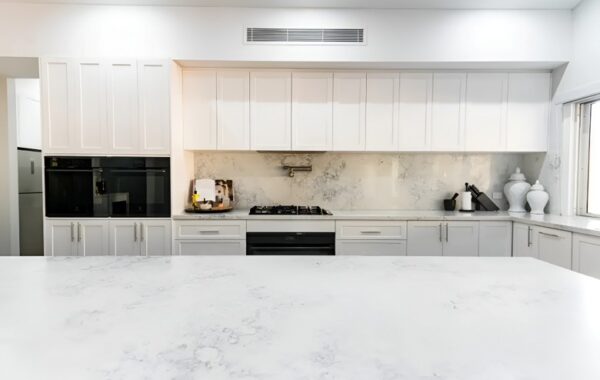
Porcelain slabs offer exceptional durability with marble-look aesthetics, resisting heat, stains and scratching at a price point accessible to most renovation budgets.
2. Natural Stone: Granite, Marble, and Quartzite
Natural stone remains a premium choice that never goes out of style. Each slab is unique, with its own grain pattern and character. For Sydney homeowners who want something genuinely individual, natural stone delivers a result that no manufactured surface can fully replicate.
Granite is the most durable natural stone for kitchen use. It resists scratching and heat well and requires sealing once a year in most applications. Marble offers extraordinary visual beauty but is more porous than granite and more susceptible to etching from acidic foods and liquids. Quartzite is a natural stone that is harder than marble and more resistant to etching, making it a popular choice for those who love the marble aesthetic without the maintenance commitment.
3. Timber Benchtops
Timber adds a warmth and natural character to kitchen spaces that stone and porcelain cannot replicate. Australian hardwoods such as blackbutt, jarrah, and spotted gum are particularly well suited to kitchen use, bringing a richness of grain and colour that improves with age when properly maintained.
Timber benchtops do require a higher level of ongoing care than stone or porcelain alternatives. Regular oiling or sealing is essential to prevent water damage and staining. They are not suited to wet zones around sinks without appropriate edge and end-grain protection. For homeowners who are prepared to maintain them, however, a well-treated timber benchtop can last decades and remain one of the most characterful elements in any kitchen.
Cabinetry Materials: The Foundation of Long-Term Performance
Kitchen cabinetry accounts for the largest visual surface area in most kitchens, and it is the component that experiences the most daily physical contact. The material of both the cabinet carcass (the structural box) and the door finish determines how the kitchen holds up to moisture, heat, and regular use over years.
HMR Melamine Carcasses
High Moisture Resistance (HMR) melamine board is the industry standard for kitchen cabinet carcasses. It is engineered specifically to resist the moisture that kitchens generate, unlike standard particleboard which swells and deteriorates with sustained humidity exposure. For Sydney kitchens where steam, splashing, and condensation are everyday realities, HMR board with properly sealed ABS edging provides the most reliable long-term structural performance at a competitive price point.
Two-Pack Polyurethane Doors
Two-pack polyurethane (two-pack) is widely regarded as the highest-performing door finish for residential kitchens in Australia. The finish is applied in a spray booth under controlled conditions and baked to cure. The result is an extraordinarily smooth, durable, and chemical-resistant surface that handles the cleaning agents used in kitchens without deteriorating.
The two-pack polyurethane dominates the premium kitchen segment in Australia for exactly this reason. The range of available colours is effectively unlimited, and the finish quality in a well-executed two-pack door is a significant step above alternatives at comparable price points.
Timber Veneer Doors
Timber veneer applies a thin slice of real timber to an engineered substrate, delivering the warmth and authenticity of solid timber at a more accessible price point and with greater dimensional stability. In Sydney’s climate, where temperature and humidity can vary significantly between summer and winter, veneer over an engineered core is more stable than solid timber panel construction. Veneer is typically finished with a clear matt or satin lacquer that protects the surface while allowing the natural grain to remain fully visible.
Laminate Doors
Modern laminate technology has advanced significantly beyond what the term suggests to many homeowners. Current high-pressure laminate products offer convincing timber, stone, and solid colour finishes with excellent scratch and moisture resistance at a price point well below two-pack or veneer alternatives. For renovation budgets that need to cover a full kitchen, laminate cabinetry paired with a quality benchtop and hardware can deliver outstanding results.
Splashback Materials: Protecting Without Compromising Style
The splashback is both a functional element and one of the most visible design decisions in a kitchen. It needs to protect the wall behind the cooking and preparation zones from moisture, heat, and splatter, while contributing to the overall aesthetic of the space.
The leading splashback choices for Sydney kitchens in 2026 include:
- Natural Stone Slab Extending From the Benchtop: Creates a seamless, luxurious aesthetic when the benchtop material is carried up the wall. Works particularly well with porcelain and sintered stone.
- Large Format Porcelain Tiles: Fewer grout lines mean easier cleaning. The visual effect closely resembles a slab installation at a more accessible price.
- Glass Splashbacks: Provide a clean, contemporary look and are among the easiest surfaces to wipe down. Custom colours are available to match any cabinetry palette.
- Handmade Ceramic Tiles: Introduce texture and artisanal character. Particularly effective in warm, layered kitchen designs and Hamptons or coastal-influenced interiors.
Custom kitchen design service at Prominent Kitchens & Joinery includes a comprehensive materials consultation where we guide every Sydney client through the full range of compliant options, balancing aesthetic goals, practical performance, and renovation budget.
The kitchen renovation mistakes at the specification stage are consistently one of the most expensive and regrettable decisions in the entire project.
Material durability is one of the most significant contributors to the overall sustainability of a renovation. A kitchen built with materials that last 20 years or more produces far less waste and embodied carbon per year of use than one that requires replacement within a decade.
Conclusion
The right materials deliver a kitchen that looks extraordinary and performs just as well a decade from now as it does on installation day. Our team is here to guide you through every option. Contact us today to book your consultation.
FAQs:
Can I still use engineered stone in my kitchen in Australia?
No. Australia banned the manufacture, supply and installation of engineered stone benchtops from 1 July 2024. Porcelain and sintered stone are the recommended alternatives.
What is the most durable benchtop material for a kitchen?
Porcelain and sintered stone offer outstanding durability, resisting heat, scratches, stains and UV fading without requiring sealing or special maintenance.
What is the best cabinet material for a long-lasting kitchen?
HMR melamine board for carcasses paired with two-pack polyurethane or timber veneer doors provides the strongest long-term performance for Australian kitchen conditions.
How does Sydney’s climate affect kitchen material choice?
Sydney’s humidity, temperature variation, and coastal conditions mean moisture resistance is essential for carcass materials, and UV resistance matters for door finishes.
Is timber a good choice for kitchen benchtops in Sydney?
Yes, when properly sealed and maintained. Timber adds warmth and character but requires regular oiling or sealing to prevent water damage and staining.
What splashback material is easiest to maintain in a kitchen?
Glass splashbacks and large-format porcelain tiles are the easiest to clean, with fewer grout lines and smooth surfaces that wipe down quickly after cooking.